No advertising channel drops out of the report
Every connected ad account becomes a channel with its own card: spend, impressions, clicks, and how many campaigns and accounts sit inside it. Next to that is the connection status and the time of the last sync, so nobody has to argue about how fresh the numbers are.
01What hurts
Why there are more channels than attention
More accounts than browser tabs
Five ad accounts across three platforms, and the only place they ever meet is a spreadsheet somebody updates by hand on Friday afternoons.
An integration that fails quietly
A token expires, the channel flips to an error state, and you learn about it a week later from suspicious zeroes — by which point part of the history is gone.
No idea how fresh the numbers are
The dashboard shows figures but never says when they were last pulled from the platform, so every discussion starts with an argument about the data.
Scroll to see it work
Channels in four moves
- 01Scattered
Without Channels, this work is spread across spreadsheets and tabs.
- 02Connected
Channels reads the accounts and data you have already connected.
- 03Found
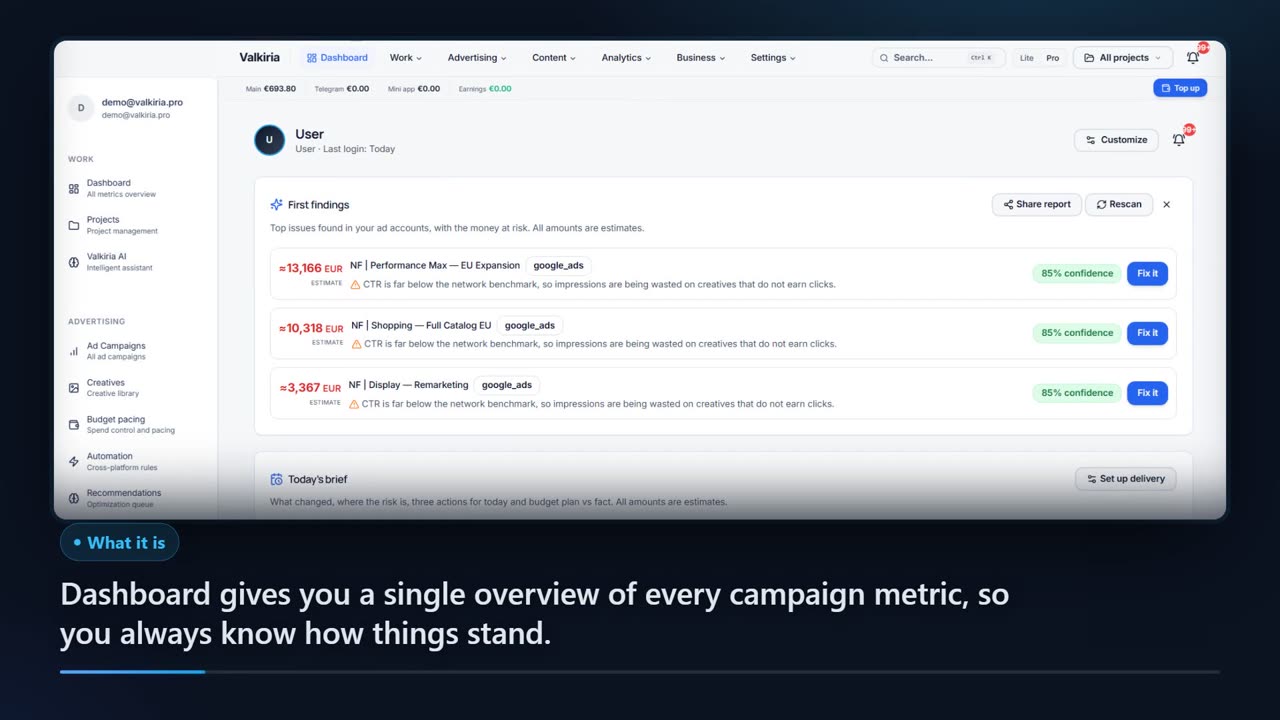
It highlights what matters now, with the evidence behind it.
- 04Approved
You decide what happens next: what applies on its own and what waits for approval.
02How it works
Three steps to one list of channels
- 01
Connect the accounts
Connection happens over OAuth on the page of the platform you need — there are thirteen. Each connected account then appears in the channel list as its own card.
- 02
Run the sync
A button on the channel pulls data now, and a switch in the channel's settings hands that job to a schedule. The last exchange is timestamped on the card.
- 03
Read the roll-up
Spend, impressions, clicks, campaign and account counts per channel on one screen, alongside a status of connected, disconnected or error.
03What you get
What the channel list gives you
One card per channel
Spend, impressions, clicks and the number of campaigns and accounts for each channel, without switching between ad managers.
01A visible connection status
Connected, disconnected or error — the state of the integration is on screen instead of being inferred from suspiciously round zeroes.
02A last-sync timestamp
Every card carries the date and time of its last exchange with the platform, so the age of the numbers never has to be guessed.
03Sync on demand
Refresh the one channel you care about right now, without waiting for a schedule and without touching the other connections.
04Auto-sync in the settings
A switch in the channel's settings leaves the refresh to a schedule, so daily numbers do not need a human to fetch them.
05The same connections as everywhere else
Channels are built from the same OAuth connections the rest of the product uses — nothing has to be authorised a second time.
0604In numbers
- 11
- ad platforms that become channels
- 3
- channel states: connected, disconnected, error
- OFF
- live edits until you switch them on for an account
Who gets what
What each type of client takes away
What you connect
- Ad accounts
- Analytics
- Website
- Bank & invoices
What Valkiria does
- 01Collect spend and results
- 02Find leaks and gaps
- 03Propose next steps
What you get
- Action plan
- Owner report
- Spend control
See every ad budget and what it returns, without opening five dashboards
Google, Meta, TikTok and the rest in one view, in your currency, with results next to costs.
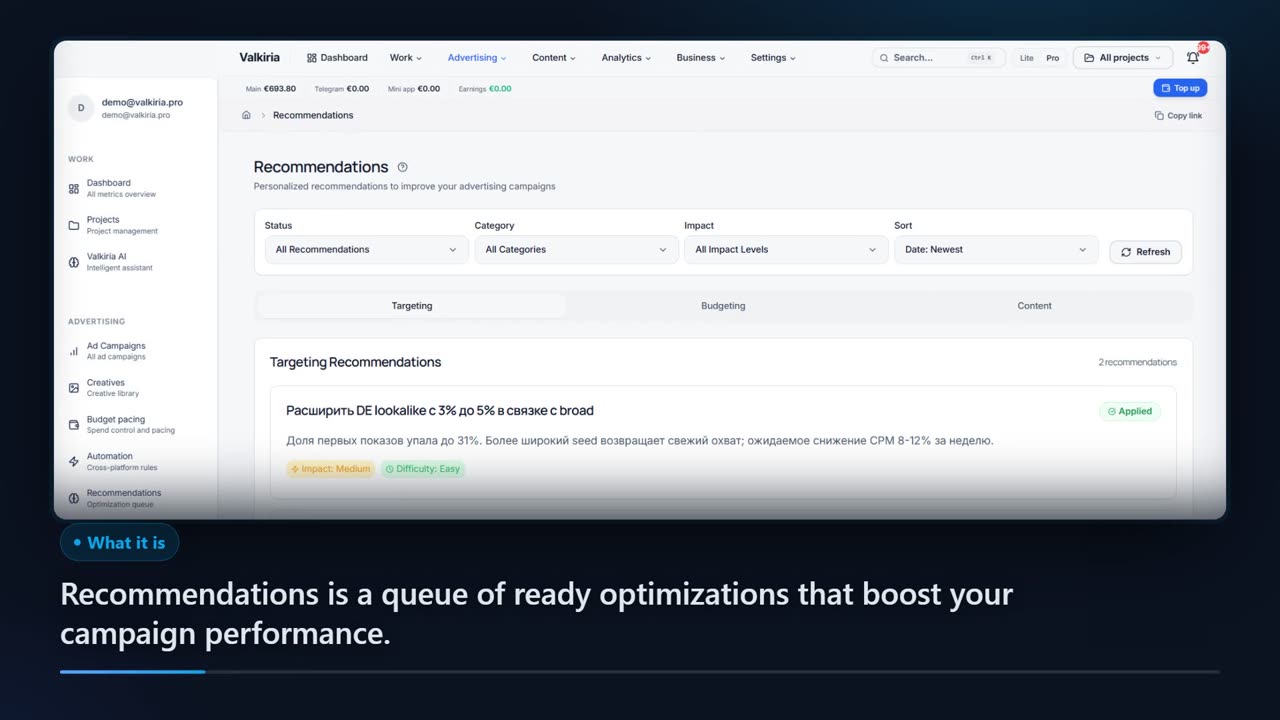
Findings turn into a prioritised list of next steps with the evidence behind each one.
New campaigns are created paused. Edits to live campaigns stay off until you switch them on for an account; deletions and new spend always wait for approval.
Modules that do the work
05FAQ
Questions about channels
06See also
All modulesStart now
Put every channel on one list
Connecting is OAuth and takes a couple of minutes per account, and the sync only reads performance data. Live edits stay off until you switch them on for an account, and you choose how much needs your approval.